 Settled OverseasSomeday Doesn’t Have to Become Never.

Heredia & Alajuela
Central Valley · real Costa Rican cities with their own hospitals — Alajuela is the airport city — on October 2026 asking samples
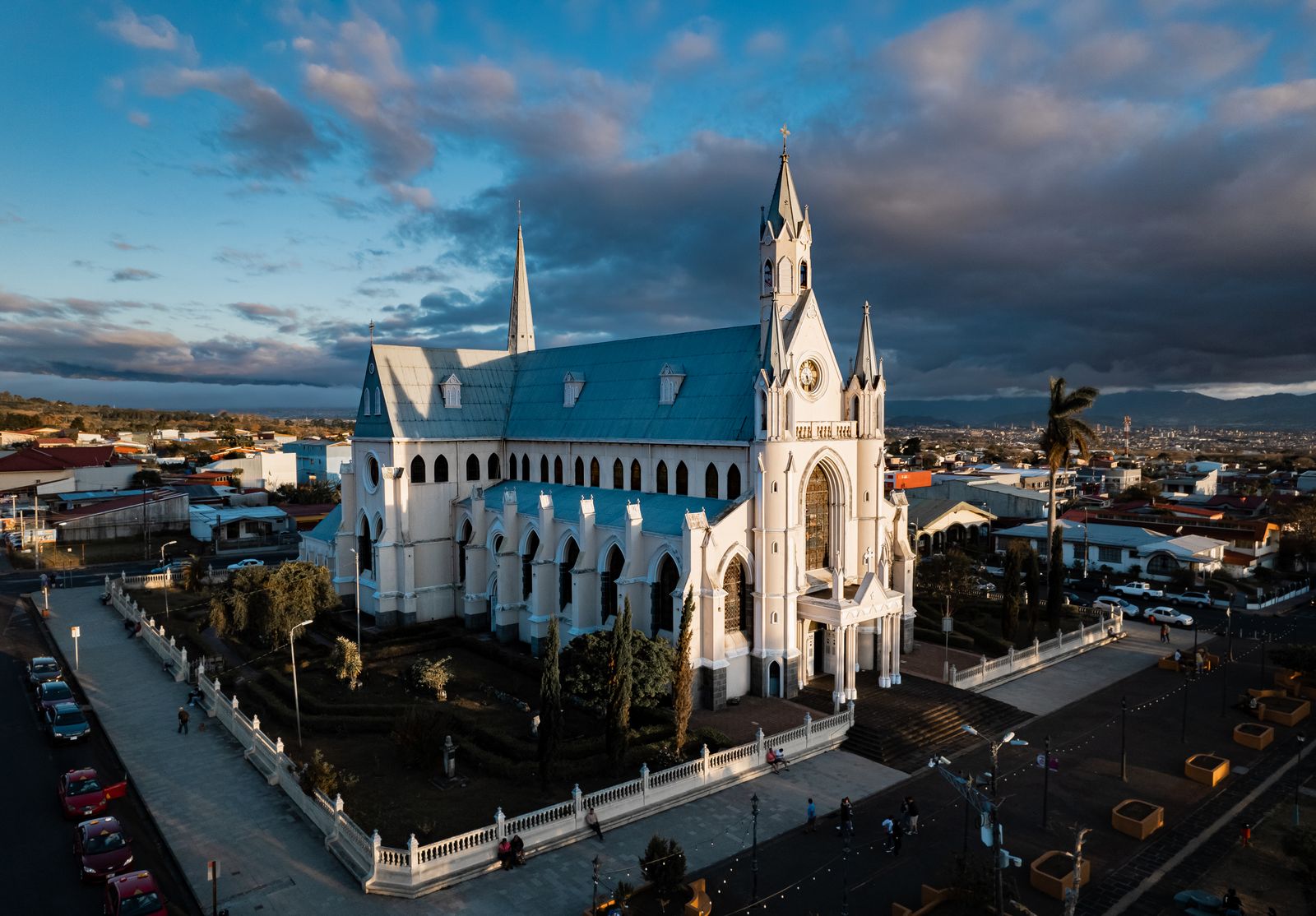
Who picks it — and why
Two lived-in provincial capitals that run their own daily lives: universities, free-trade-zone employers, markets, and their own large public hospitals — San Vicente de Paúl in Heredia and San Rafael in Alajuela — plus private clinics including Metropolitano sites in the Heredia area. Alajuela is the airport city, 5–15 minutes from SJO’s terminals; Heredia runs 25–40 minutes depending on traffic. You get Central Valley services at a mid-price band instead of Escazú prices.
Who should skip it
Skip these cities if your landing depends on deep English-facing services — Escazú and Santa Ana carry far more of them, and here Spanish carries daily life. Skip them, too, if daily private tertiary care is the plan: the top private hospitals are a metro drive away, not across town.
Not moving on a pension? Costa Rica’s routes separate pensionado (US$1,000/month lifetime pension), rentista (US$2,500/month), family and long stays — the country page carries each route with its limits, from Ley 8764. Anything unverified is marked as a gap.
Asking-rent samples, dated
- Heredia, 2-bed asking samples
- US$1,300/month and ₡430,000–₡535,000/month (October 2026 asking rents)
- Planning band, 2-bed
- US$800–1,300/month across both cities
- Conservative couple total
- US$2,500–3,200/month — rent band plus CAJA and modest private pay for a healthy 60s couple; excludes vehicle purchase, flights, residency legal fees and setup costs
- Alajuela asking samples
- No separate dated Alajuela-only rent series was captured in this pass — the planning band covers both cities and prints as a band, not as per-city listings
The gap we print as a gap: the dated samples are Heredia-side; no equivalent Alajuela-only sample set was captured, so the band is shared rather than split into two false precisions. Samples are asking rents in expat-visible channels; local colón-priced unfurnished homes run lower and are not printed as listings.
Figures: Settled Overseas Costa Rica research, 8 October 2026. Rents are October 2026 asking samples — asking is not paid.
Healthcare access
Each city has its own large CAJA public hospital — San Vicente de Paúl (Heredia) and San Rafael (Alajuela) — which is more than most towns on this site can say, and private clinics including Metropolitano’s network sites cover much routine and specialist care. For the top private tier (CIMA, Clínica Bíblica), plan the drive into the San José–Escazú metro. CAJA remains the mandatory base for residents; the wait-time weakness of the public system applies here as everywhere.
Climate, honestly
The same Central Valley band as the capital — mild year-round, roughly 65–80°F, with Alajuela reading slightly warmer than Heredia at the valley’s western edge. Air-conditioning is a choice, not a survival line.
Getting around — and back to the US
Alajuela’s draw is geographic: SJO’s terminals are 5–15 minutes away, which makes it the natural base for movers who fly often or host visiting family. Heredia is 25–40 minutes from the airport depending on traffic. Both cities have intercity bus links into San José; residents with cars face the same metro traffic as the capital at peak hours.
Expat life & English
A thinner foreign layer than Escazú’s — these are Costa Rican cities first, with foreign residents woven in rather than a district built around them. University life (Heredia hosts the Universidad Nacional) shapes the rhythm. Budget for Spanish as the operating language of landlords, clinics and bureaucracy.
Watch-outs
- Spanish is not optional here. If your Spanish is at zero, the landing is steeper than the rent band suggests — price lessons or help into the plan.
- Costa Rica is U.S. Level 2 (crime). The national guidance applies in both cities: no displayed wealth, no walking alone on poorly lit streets, no resisting a robbery.
- Do not split the shared rent band into fake per-city figures when budgeting — the honest band is US$800–1,300 until a dated Alajuela sample says otherwise.
A short city story
Alajuela is the city of the airport and of Juan Santamaría, the drummer-boy hero of 1856 whose name the airport carries; Heredia, the “city of flowers,” grew around coffee and the university. For a mover, the pair offers the Central Valley’s services with a working-city texture — the version of Costa Rica most Costa Ricans in the valley actually live in.
Your next step
- Start with the interactive planner — your answers build your personal dossier
- City chapters with dated rent samples, and healthcare depth by city
- 14-day promise: if it isn’t what was described, email us within 14 days — we’ll make it right or refund you in full.
Secure checkout powered by Stripe. Access opens as soon as your order confirms.
This page is education, built from public sources checked on the dates shown (Settled Overseas Costa Rica fact spine, 8 October 2026). It is not legal, tax, or medical advice; residency outcomes stay with the DGME and your own licensed advisors. Asking rents are dated samples, not medians or budgets; anything we could not verify is printed as a gap.