 Settled OverseasSomeday Doesn’t Have to Become Never.

La Fortuna
Arenal · the volcano town — hot springs, rain measured in metres, and the healthcare constraint printed before the brochure
Who picks it — and why
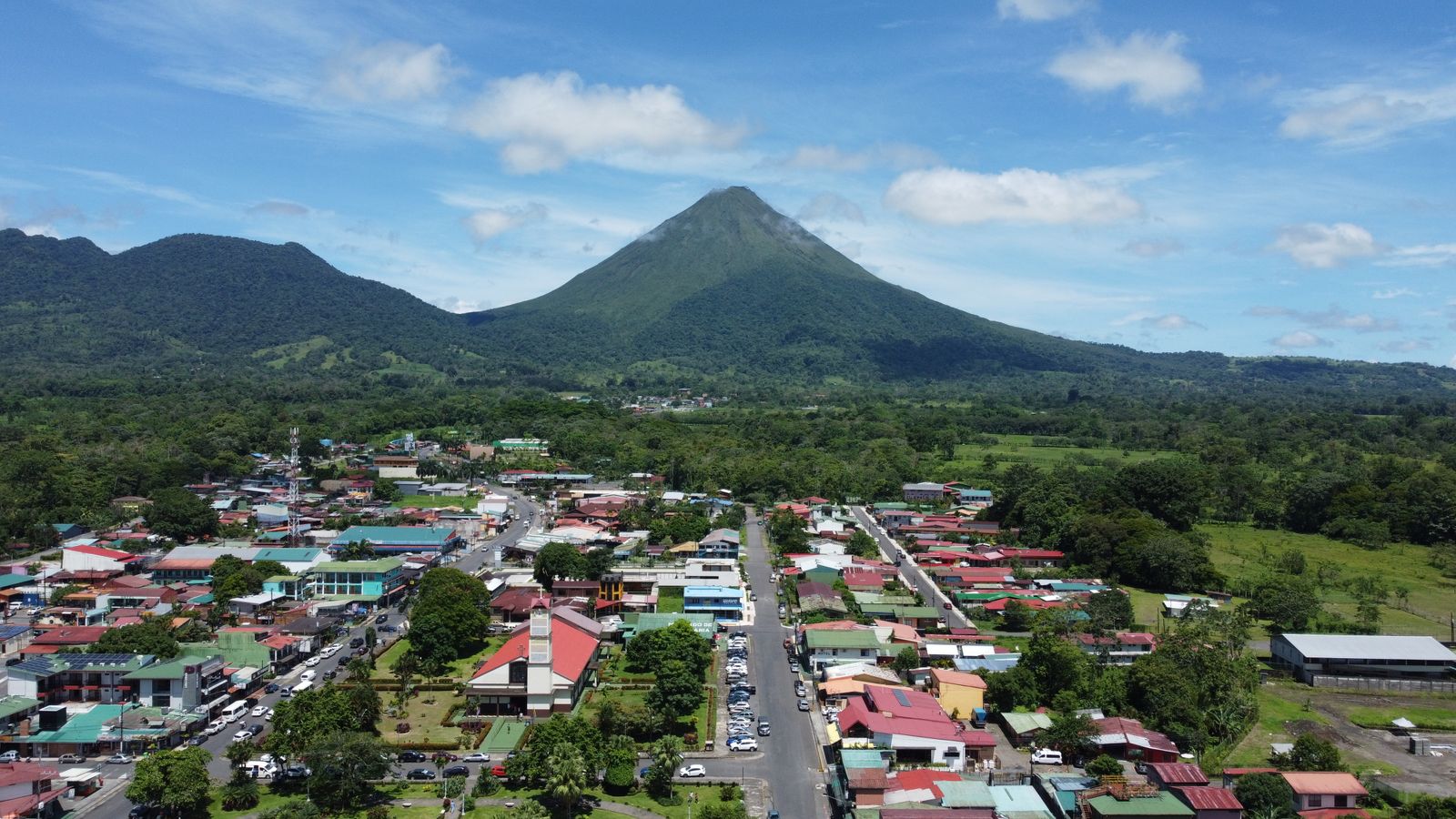
La Fortuna is chosen for a setting, not a service map: Arenal Volcano over the town, hot springs, and a lush inland climate unlike anywhere else in Costa Rica — warm and very wet, with maxima of 28–32°C and annual rainfall above 3,400 mm in climatology summaries. A tourism economy supports restaurants and tours, and a smaller long-stay expat layer has formed inside it. If daily life beside a volcano in the rain is the dream, this is the country’s address for it.
Who should skip it
Skip La Fortuna if your health profile makes distance to a hospital a risk rather than an inconvenience. The town has a medical clinic, but serious injuries may require medical evacuation: the regional CCSS hospital (San Carlos, in Ciudad Quesada) is over an hour by road, there is no private hospital in town, and SJO is roughly 2.5–3.5 hours by road. That constraint is the page’s first fact, not its footnote — choose this town with it, not around it.
Not moving on a pension? Costa Rica’s routes separate pensionado (US$1,000/month lifetime pension), rentista (US$2,500/month), family and long stays — the country page carries each route with its limits, from Ley 8764. Anything unverified is marked as a gap.
Asking-rent samples, dated
- 2-bed asking samples, expat-facing
- US$1,200–1,500/month (October 2026 asking rents)
- Planning band, 2-bed
- US$900–1,500/month
- Conservative couple total
- US$2,600–3,400/month — rent band plus CAJA and modest private pay for a healthy 60s couple; excludes vehicle purchase, flights, residency legal fees and setup costs
- Evacuation / private-transfer reserve
- GAP — a real cost of living here that the guides do not price. Budget a reserve of your own sizing; we do not invent the figure
- Local-market note
- A ₡200,000/month local listing captured in this pass proves a cheaper Spanish-language market exists; it is not a retiree planning figure and is not blended into the band
The gap we print as a gap: the evacuation reserve. Every honest account of La Fortuna includes the possibility of a paid private transfer or evacuation, and no source we trust publishes a standard price for it. The couple total above therefore excludes the one cost this town uniquely carries — size your own reserve with an insurer or transfer provider in writing before you sign a lease.
Figures: Settled Overseas Costa Rica research, 8 October 2026. Rents are October 2026 asking samples — asking is not paid.
Healthcare access
A medical clinic in town handles daily medicine. Everything serious routes out: the CCSS regional hospital in Ciudad Quesada (San Carlos) is over an hour by road, the private tier is in the San José metro hours away, and some presentations will mean evacuation rather than a drive. CAJA affiliation is still the mandatory base, but in La Fortuna the base is thinner than anywhere else on the Costa Rica page — the honest sentence is that you are accepting response-time risk in exchange for the setting.
Climate, honestly
Warm, humid and very wet: maxima of 28–32°C and annual rainfall above 3,400 mm in climatology summaries. The rain is not a season here so much as a climate — it greens the volcano, fills the hot springs’ hillsides, and shapes everything from road conditions to what a house needs against mould. Air-conditioning matters less than dehumidification and drainage; inspect both in any rental.
Getting around — and back to the US
SJO is roughly 2.5–3.5 hours by road; current domestic-air schedules were not verified in this pass, so no flight times are printed. A car is close to mandatory for long-stay life — the Ciudad Quesada hospital run, the supermarkets and the town’s spread-out hot-springs corridor are all drives. Drive the hospital route once, in the rain, before deciding.
Expat life & English
A tourism-first town: the foreign layer is real but organised around visitors — tours, hotels, restaurants — with a smaller community of long-stay residents inside it. English is widely available in the tourism economy; Spanish carries the rest. Long-stay residents tend to be people who visited, understood the constraint list, and chose the volcano anyway.
Watch-outs
- The evacuation constraint is the decision: clinic locally, regional hospital over an hour away, no private hospital in town. If that sentence worries you, it is the answer — read the metro or Grecia/Atenas pages instead.
- Rainfall above 3,400 mm a year is a housing fact: check drainage, mould history and road access in the wettest months before signing anything long.
- Domestic flight schedules were not verified for this page — do not build an airport plan on a timetable nobody checked.
A short city story
The town was called El Burío until the 1968 Arenal eruption — which devastated the volcano’s western side and killed 87 people — after which the surviving town took the name La Fortuna, “the fortunate one,” for its own escape. The volcano slept from 2010 after four decades of activity; the hot springs and the lake remained. It is a beautiful, serious place, and this page treats it as both.
Your next step
- Start with the interactive planner — your answers build your personal dossier
- City chapters with dated rent samples, and healthcare depth by city
- 14-day promise: if it isn’t what was described, email us within 14 days — we’ll make it right or refund you in full.
Secure checkout powered by Stripe. Access opens as soon as your order confirms.
This page is education, built from public sources checked on the dates shown (Settled Overseas Costa Rica fact spine, 8 October 2026). It is not legal, tax, or medical advice; residency outcomes stay with the DGME and your own licensed advisors. Asking rents are dated samples, not medians or budgets; anything we could not verify is printed as a gap.